
Free Checklist Download
BUILDING YOUR EMPATHY SKILLS
Practical Steps to Develop & Strengthen Your Empathy Skills
Great leaders don't just manage tasks, they understand people. This practical checklist gives you the exact steps to develop the empathy skills that transform how you connect, communicate, and inspire trust in every workplace interaction.
You know that feeling when someone on your team is struggling, but you're not sure how to help? Or when a conversation goes sideways because you missed the emotional undercurrent? You're not alone. Most professionals never learned how to read the room, recognize what others are feeling, or respond in ways that build real connection.
The cost of low empathy shows up everywhere. Misunderstandings multiply. Trust erodes. Team members disengage. Projects stall because people don't feel heard or valued. You might be excellent at your job technically, but without strong empathy skills, you're missing the human element that makes great leadership possible.
A Clear Path to Deeper Connection
This checklist breaks down empathy into simple, actionable steps you can practice right away. No theory overload. No complicated frameworks. Just clear guidance on recognizing emotions (yours and others'), listening in ways that make people feel truly heard, and responding with the kind of understanding that builds lasting trust.
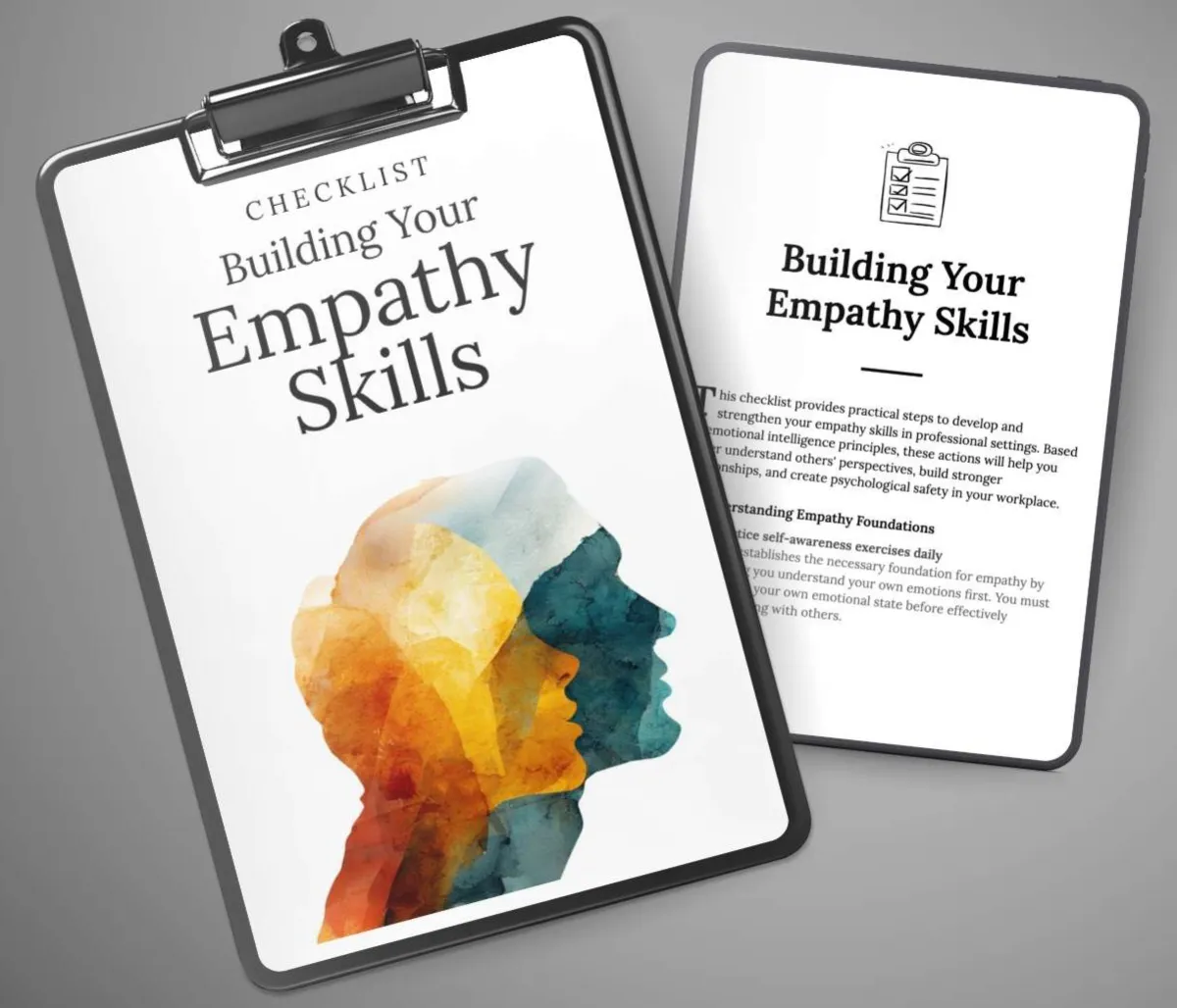
What You'll Gain
You'll discover how to tune into the subtle signals people send when words don't tell the whole story. You'll learn practical techniques for active listening that go beyond nodding and waiting for your turn to speak. Each step builds on the last, creating a foundation of empathy that improves every professional relationship you have.
Transform Your Workplace Presence
With stronger empathy skills, you become the leader people want to work with. The colleague others seek out. The team member who creates psychological safety just by being present. You'll notice conversations flowing more smoothly, conflicts resolving faster, and collaboration becoming genuinely enjoyable instead of forced.
Key Benefits
Recognize emotions before they escalate – Learn to spot the early signs of frustration, disengagement, or stress in yourself and others so you can respond before small issues become big problems
Master active listening techniques – Move beyond surface-level conversations with practical methods that help people feel genuinely heard and understood
Build authentic workplace connections – Create the kind of trust and rapport that makes collaboration natural and conflict resolution easier
Strengthen your leadership presence – Develop the emotional intelligence that separates good managers from leaders people actually want to follow
Create psychological safety on your team – Foster an environment where people feel comfortable sharing ideas, admitting mistakes, and doing their best work
Respond with confidence in difficult moments – Know exactly what to say and do when emotions run high or conversations get uncomfortable
Improve team performance through understanding – Watch productivity and morale rise when people feel valued and supported at a human level
Ready When You Are
This isn't about changing who you are. It's about developing a skill that makes you better at everything you already do. Better at leading. Better at supporting. Better at creating the kind of workplace where people do their best work because they feel genuinely valued.


